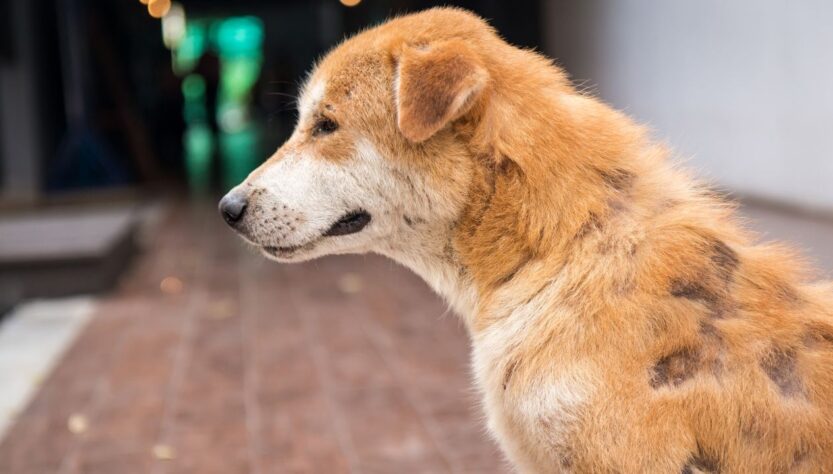
Hair loss in dogs is quite common, but if it occurs abnormally or persists, it could be a warning sign of a health problem. Early identification of the cause and application of appropriate treatment will help your pet recover quickly and maintain a healthy coat. This article will help you understand how to effectively recognize and treat hair loss in dogs.
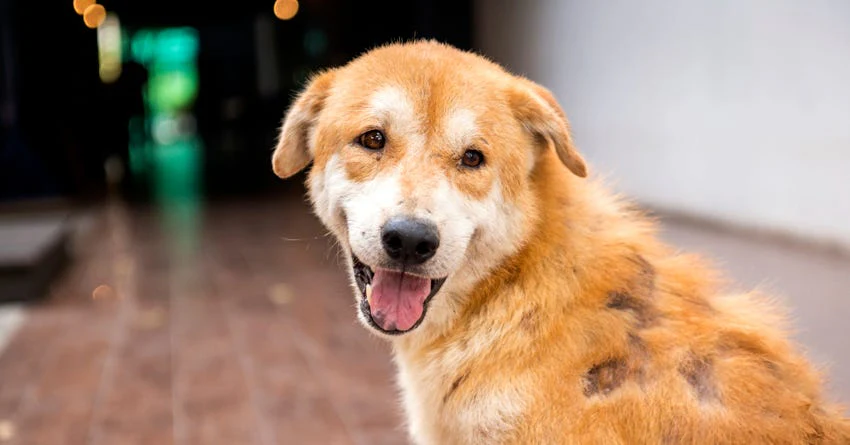
- Hair Loss in Dogs – When Is It Normal?
Dogs usually shed hair in a natural cycle, especially during seasonal changes. This is a normal phenomenon to replace the old coat with a new, healthier one.
Signs of Normal Hair Loss:
Even shedding all over the body
No noticeable bald patches
Skin is not red, inflamed, or has an unusual odor
The dog still eats, drinks, and behaves normally
If the hair loss is mild and without other symptoms, you don’t need to worry too much.
- Signs of Abnormal Hair Loss
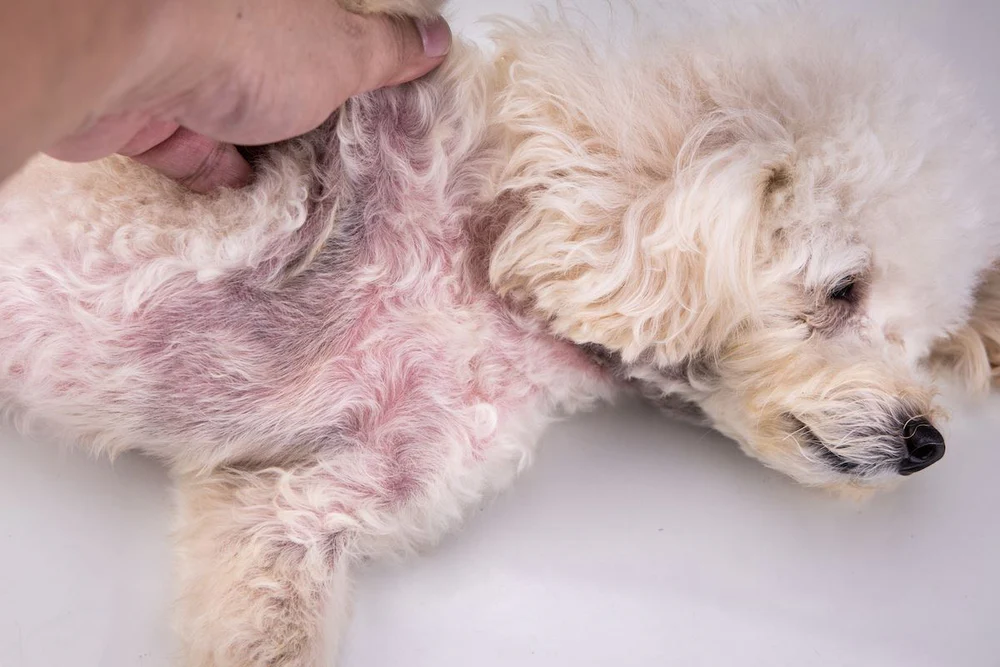
You should pay attention to the following signs:
Hair loss in patches or distinct areas
Red, itchy, scaly skin or pimples
Scratches from excessive scratching
Dry, brittle fur
Unpleasant odor from the skin
These are signs that your dog may be experiencing skin or health problems.
- Causes of Hair Loss in Dogs
3.1. External Parasites
Ticks, lice, and fleas are common causes of hair loss. They cause itching, excessive scratching, and skin damage.
3.2. Fungal and Bacterial Infections
Skin diseases caused by fungi or bacteria can cause:
Hair loss in patches
Peeling, scaly skin
Spreads quickly if left untreated
3.3. Allergies
Dogs can be allergic to:
Food
Shampoo
Environmental factors (dust, pollen)
Allergies often cause itching and hair loss accompanied by dermatitis.
3.4. Nutritional deficiencies
A lack of protein, vitamins, or minerals weakens the coat, making it prone to breakage and slow regrowth.
3.5. Stress or environmental changes
Stress also affects the health of a dog’s skin and coat.
- Treatment for hair loss in dogs
4.1. Hygiene and coat care
Bathe your dog with specialized shampoo
Keep the skin clean and dry
Brush the coat regularly to remove dead hair
4.2. Parasite control
Use flea and tick drops or sprays
Keep the living environment clean
Wash the dog’s bedding regularly
4.3. Treating fungal infections and dermatitis
Use topical medications or baths as directed
Avoid scratching to prevent further skin damage
Oral medication may be needed if the condition is severe
4.4. Improving nutrition
Supplement protein from meat, fish, and eggs
Add omega 3 and 6 for a shiny coat
Supplement vitamins A, E, and B-complex
4.5. Reducing stress for dogs
Create a comfortable living environment
Increase playtime and exercise
Avoid sudden changes in environment - Preventing hair loss
To reduce hair loss, you should:
Bathe and brush regularly
Use appropriate grooming products
Provide a balanced diet
Check skin and coat regularly
Deworm regularly
- When should you take your dog to the veterinarian?
You should take your dog to the veterinarian if:
Prolonged hair loss that doesn’t improve
Large bald patches appear
Severe skin inflammation, pus, or a foul odor
The dog refuses to eat and is lethargic
A visit to the veterinarian will help determine the exact cause and provide more effective treatment.
- Conclusion
Hair loss in dogs can be normal but can also be a sign of illness. Early recognition and proper treatment will help your pet recover quickly and maintain a healthy coat. Combine good hygiene, proper nutrition, and regular health monitoring to ensure your dog is always in the best condition.